
Water Well Pressure Switch

What is a well pump pressure switch?

A well pump pressure switch turns your pump on and off to keep your water pressure steady. This guide explains how it works and helps you choose the right Merrill pressure switch for your well.

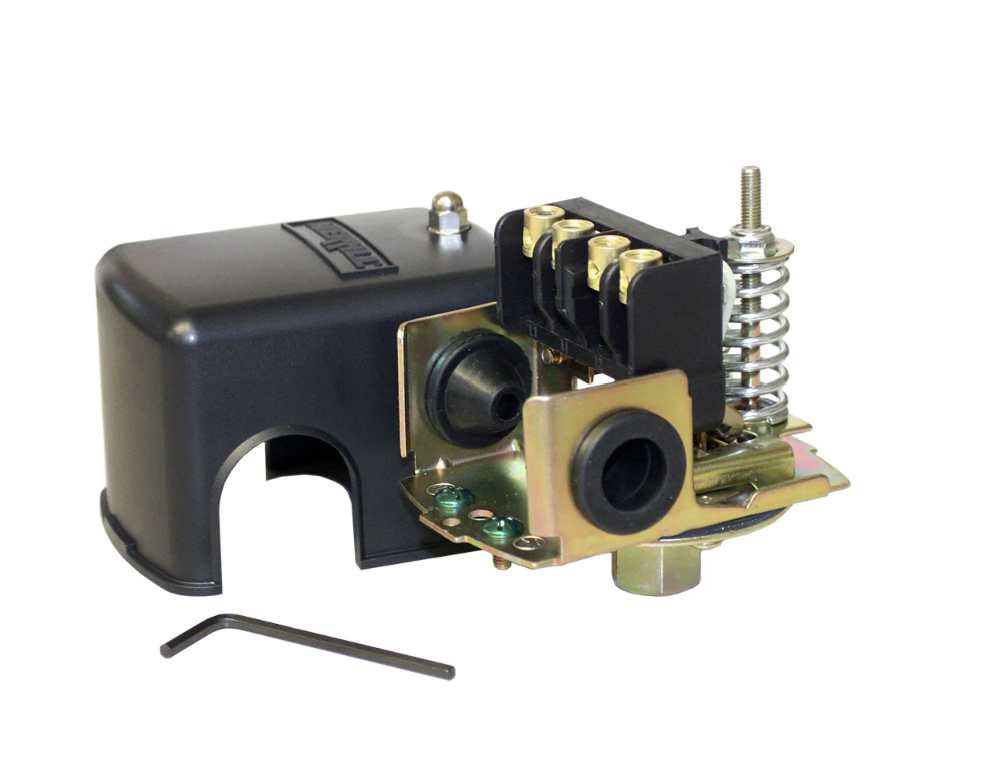
Merrill pressure switch with the cover removed, showing internal springs and electrical contacts
The Basics

How a Well Pump Pressure Switch Works?

A well pump pressure switch automatically turns your pump on and off to keep steady water pressure in your home or on your farm. When you use water, the pressure drops and the switch turns the pump on. When the pressure tank reaches the set pressure, the switch turns the pump off.

Simple. Reliable. Essential.

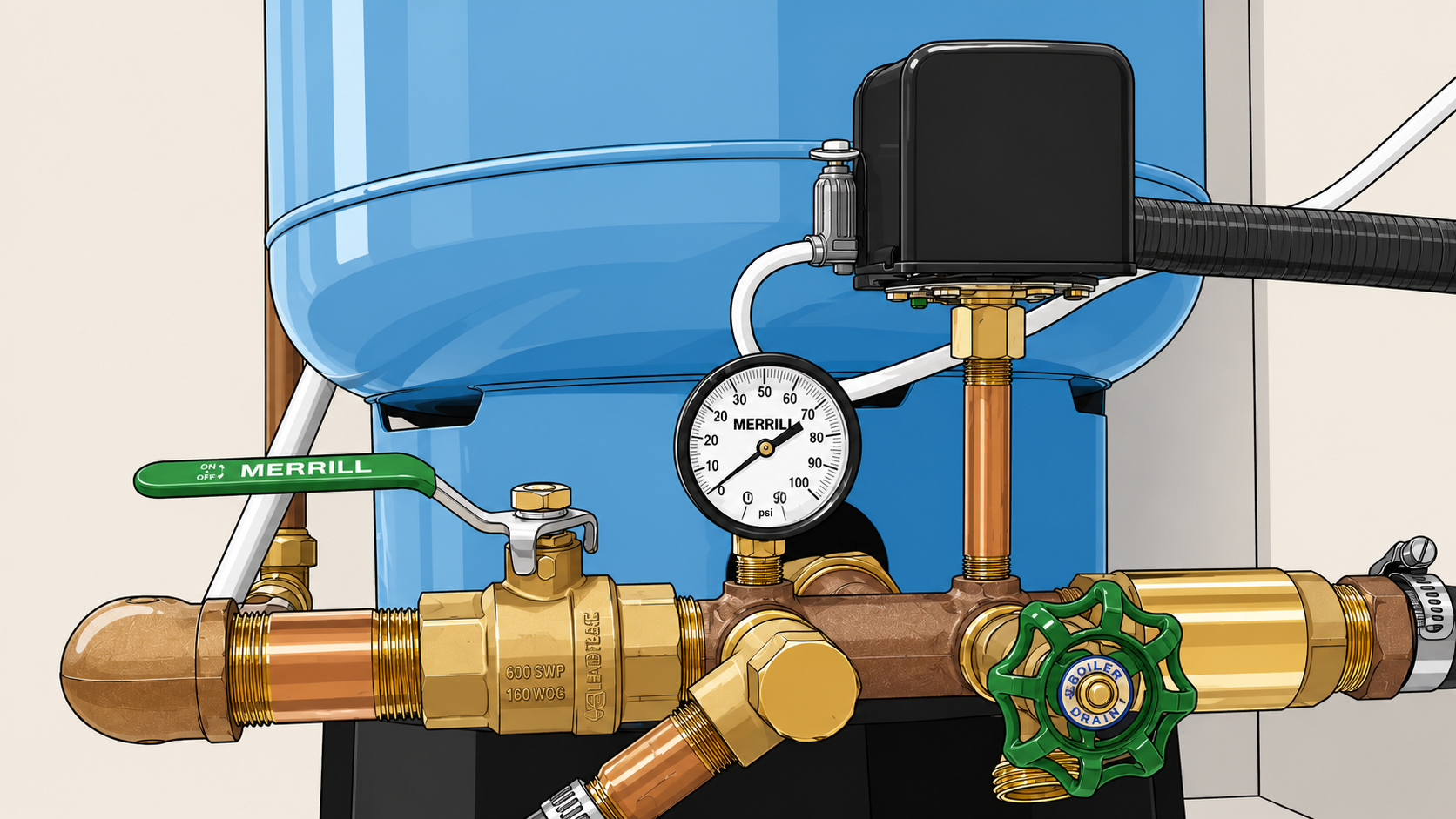
Well water system with a pressure tank, pressure gauge, and a Merrill pressure switch controlling the pump

Every time you use water, your pressure switch is working behind the scenes to keep your water pressure steady.

Typical setup

30/50 or 40/60 PSI

The two numbers on a well pressure switch are the cut-in pressure (when the pump turns on) and the cut-out pressure (when the pump turns off). This example shows a common 40/60 psi setup.

Pump turns on at
40 PSI
Pump turns off at
60 PSI
Tank pre-charge
38 PSI
What Makes a Good One

What Makes a Quality Pressure Switch?

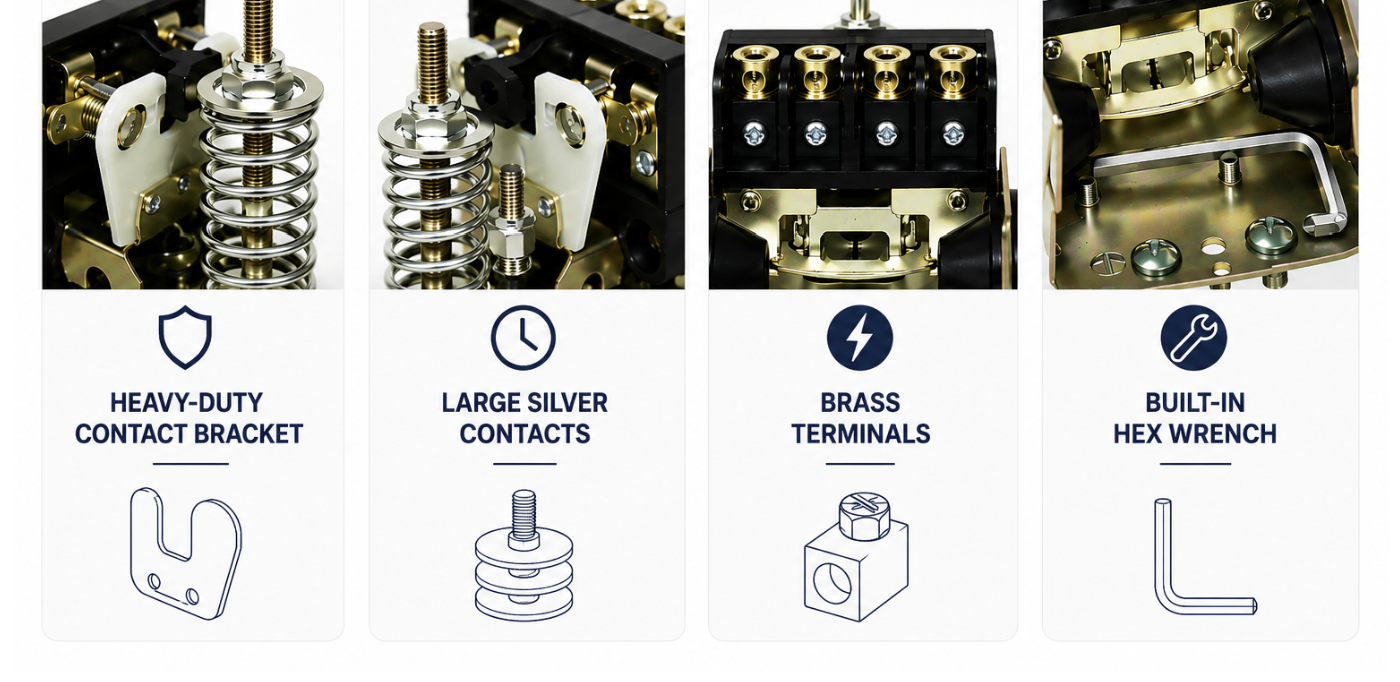
Not all pressure switches are built the same. The quality of the internal components can make a difference in long-term performance and reliability.

Quality components of a Merrill pressure switch: heavy-duty contact bracket, large silver contacts, brass terminals, and built-in hex wrench
How Do I Choose One?

Three questions. That's the whole decision.

Answer these three simple questions, and you'll be able to confidently choose the right switch for your well system.

1

What pressure range do you need?

Choose a pressure switch that matches your system's pressure range. Most residential well systems use 30/50 PSI or 40/60 PSI, but 20/40, 50/70, 60/80, and 80/100 PSI options are also available. See our complete Pressure Switch Decision Guide for a full range breakdown. Pressure Switch Decision Guide

Answer: 20/40, 30/50, 40/60, 50/70, 60/80, or 80/100 PSI
2

What voltage does your pump use?

Pressure switches are rated for specific voltages — most residential pumps are 115V or 230V. Make sure the switch matches your pump's voltage and horsepower rating for safe, reliable operation. Browse the full Merrill pressure switch collection to check specs by model. Merrill pressure switch collection

Answer: 115V or 230V (check your pump nameplate)

3

Do you need a standard or heavy-duty switch?

Most homeowners can use a standard switch. Upgrade to a heavy-duty switch for frequent pump cycling, heavier use, and components designed for longer service life. Compare standard, heavy-duty, and control switch options in the Switches & Gauges collection. Switches & Gauges collection

Answer: Standard residential vs. heavy-duty vs. low-pressure cut-off

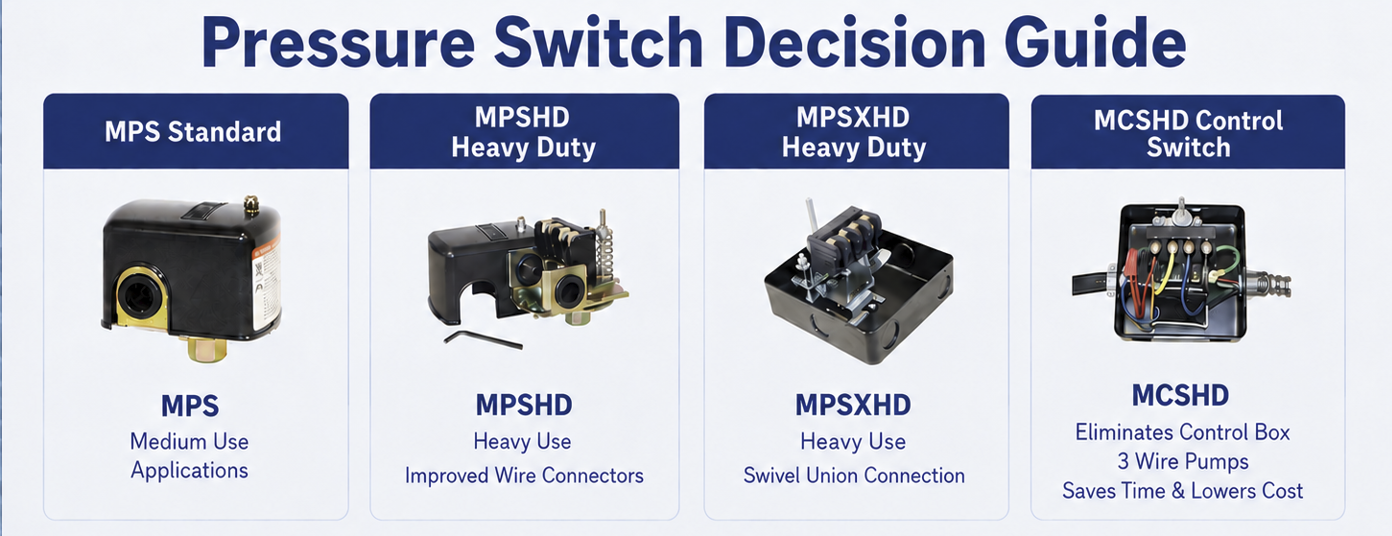
Pressure Switch Decision Guide showing MPS Standard, MPSHD Heavy Duty, MPSXHD Heavy Duty, and MCSHD Control Switch models

Find the Right Merrill Pressure Switch

Still not sure which pressure switch is right for your well system? Our complete Pressure Switch Decision Guide compares every Merrill pressure switch, including standard, heavy-duty, low-pressure cut-off, manual reset, and control switch models, so you can quickly find the right one for your application.

Explore Merrill Pressure Switches